How to Source Bulk Sportswear from Pakistan: A Complete Guide for European and Gulf Importers
If you are a brand owner, wholesale distributor, or bulk importer in Europe or the Gulf — and you are still sourcing sportswear from China or Turkey — there is a very strong chance you are overpaying.
Pakistan has quietly become one of the world’s most powerful sportswear manufacturing destinations. It offers a rare combination that international buyers rarely find in one place: world-class production quality, highly competitive pricing, and zero import duty access for European markets under GSP+. For Gulf buyers, short sea freight routes and zero-tariff trade arrangements make Pakistan an equally compelling source.
At the heart of it all is Sialkot — a city that has built its entire identity around manufacturing excellence for global export. Every major category of sportswear, from custom gym wear and activewear to team kits and private label collections, is produced here at scale and shipped to buyers across five continents.
This guide walks you through the complete process of sourcing bulk sportswear from Pakistan — from defining your requirements to receiving your shipment — with everything a European or Gulf importer needs to know to do it safely, smartly, and profitably.
Why Pakistan Is the Smart Choice for Sportswear Sourcing in 2025
Zero Import Duty for European Buyers Under GSP+
Pakistan holds GSP+ (Generalised Scheme of Preferences Plus) status with the European Union. This means qualifying textile and apparel exports — including all categories of sportswear — enter EU member states at zero import duty.
The practical impact is significant. Importing comparable sportswear from China attracts a standard EU import duty of 12%. On a €200,000 order, sourcing from a sportswear manufacturer in Pakistan instead saves you €24,000 in duty costs alone — before accounting for the lower unit manufacturing price.
For European importers, this is not a minor advantage. It is a structural cost benefit that compounds across every order, every season.
Favourable Trade Access for Gulf Importers
For buyers in the UAE, Saudi Arabia, Kuwait, Qatar, Bahrain, and Oman, Pakistan offers equally strong trade conditions. Pakistan and GCC countries maintain strong bilateral trade relationships with minimal tariff friction on textile exports. Combined with geographic proximity — Karachi to Dubai by sea is under 4 days — Pakistan is the most logistically efficient bulk sportswear sourcing market available to Gulf buyers.
Gulf brands building private label sportswear collections or sourcing wholesale activewear for retail distribution consistently find Pakistani manufacturers deliver faster turnaround, lower cost, and better quality responsiveness than distant alternatives.
Sialkot: The World’s Sportswear Manufacturing Hub
When international buyers talk about sourcing sportswear from Pakistan, they are almost always talking about Sialkot. This city in Punjab province has been a global sports goods and sports garments manufacturing hub for over a century. Sialkot supplies footballs to FIFA World Cups, cricket equipment to international boards, and sportswear to professional clubs and major retail brands across Europe, the Gulf, and North America.
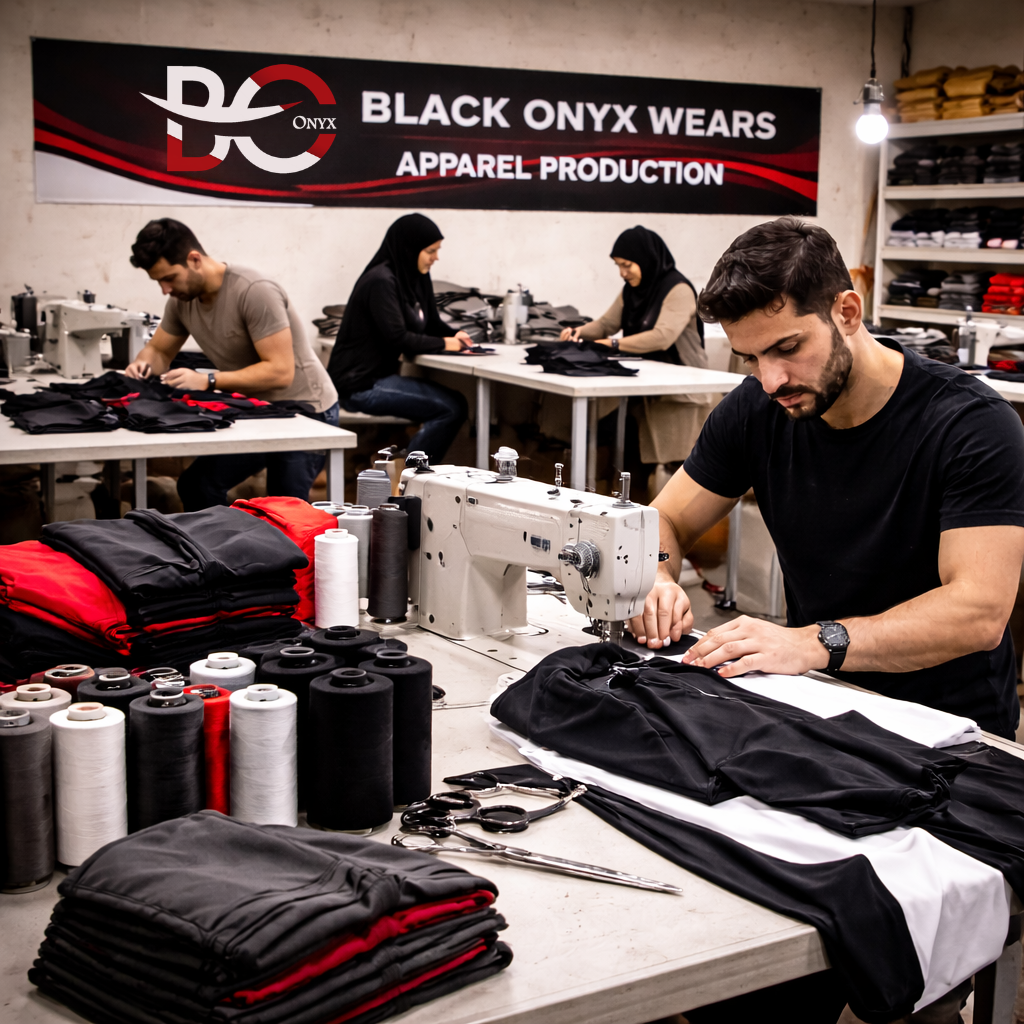
The sportswear companies in Sialkot operate as an integrated industrial cluster — fabric mills, trim suppliers, cutting units, stitching factories, sublimation printing houses, embroidery units, and export logistics providers are all concentrated in one area. This means faster production timelines, lower costs, and easier quality management for buyers.
When you source from a sportswear manufacturer in Sialkot, you are not working with a generic garment factory. You are partnering with specialists whose entire capability is built around performance apparel for international markets.
Step 1: Define Your Requirements Before You Approach Manufacturers
The most common mistake importers make — in both Europe and the Gulf — is approaching manufacturers with vague, open-ended inquiries. This produces inconsistent quotes, wastes time on both sides, and makes it impossible to compare suppliers accurately.
Before you contact any bulk sportswear supplier in Pakistan, have clear answers to these questions:
What product categories do you need?
Pakistan manufactures across the full sportswear spectrum. Be specific:
- Football kits, training jerseys, and squad uniforms
- Custom gym wear — leggings, sports bras, shorts, tank tops, gym sets
- Custom activewear — yoga collections, running apparel, cycling kits, fitness sets
- Compression and performance base layers
- Tracksuits, hoodies, training tops, and warm-up jackets
- Casual athletic and lifestyle sportswear
What fabrics are required?
Fabric specification is one of the most important decisions you will make. Common options include:
- Moisture-wicking polyester interlock or mesh — for jerseys and team kits
- Sublimation-ready 100% polyester — for all-over printed designs
- Nylon-spandex or polyester-spandex blends — for gym wear and activewear
- Fleece and French terry — for hoodies, tracksuits, and training tops
- Recycled polyester — for eco-conscious European retail collections
What are your volume requirements?
Be realistic about quantities. This directly determines which manufacturers can serve you and at what pricing tier.
Do you need private label manufacturing?
If you are building or growing your own brand, you will need a private label clothing manufacturer who can produce with your own woven labels, branded hangtags, custom packaging, and polybag printing. Confirm this requirement upfront — it affects sampling, lead times, and cost.
What is your target delivery date?
Work backwards from your selling season. Production lead time plus sea freight to Europe or the Gulf means you need to place orders 8–12 weeks before your required stock arrival date.
Step 2: Find and Verify the Right Manufacturing Partner
With your requirements defined, the next step is identifying the right partner from the hundreds of sportswear companies in Sialkot operating in the export market.
Where to Find Verified Pakistani Sportswear Manufacturers
- TDAP (Trade Development Authority of Pakistan) — the official government export authority; their online directory lists verified, export-registered manufacturers by product category
- PSGA (Pakistan Sports Goods Association) — the Sialkot industry body representing sports garments manufacturers
- Alibaba and Global Sources — useful for discovery but require careful verification; filter for Gold Suppliers with Trade Assurance and verified factory status
- Trade exhibitions — ISPO Munich, Texworld Paris, and Source It (Dubai) feature Pakistani sportswear exhibitors regularly
- Direct referrals — the most reliable channel; ask contacts in the industry who they source from in Pakistan
How to Verify a Manufacturer Before Committing
Finding a custom sportswear manufacturer is easy. Verifying one properly is what separates buyers who build strong supply chains from those who encounter costly problems.
Ask about their European and Gulf client base. A manufacturer actively supplying European or Gulf buyers already understands compliance documentation, quality expectations, and communication standards for your market. Those without this experience require far more hand-holding and carry higher risk.
Check their export registration. Legitimate Pakistani exporters are registered with TDAP and their regional Chamber of Commerce. Ask for their TDAP registration number and verify it.
Request compliance certifications. For European buyers with retail customers or ethical sourcing policies, ask about:
- OEKO-TEX Standard 100 — confirms fabrics are free from harmful substances
- BSCI / SEDEX / SA8000 — social compliance audits verifying labor standards
- ISO 9001 — quality management certification
Evaluate communication quality. This is not a soft metric — it is a hard business indicator. How quickly does the manufacturer respond? Do they ask intelligent questions about your requirements? Do they proactively flag constraints or potential issues? Poor communication at the inquiry stage reliably predicts poor communication during production — when it matters far more.
Order samples. There is no substitute. Before any bulk order, order samples from your tech pack or reference garment. A competent bulk sportswear supplier will deliver samples within 10–20 working days.
Step 3: Evaluate Samples Properly
Sample evaluation is where many importers — particularly first-time buyers — lose discipline. Do not approve a sample because it looks good in photographs. Evaluate it physically and systematically:
Construction quality
- Is the stitching consistent and even throughout?
- Are seam allowances correct and seams lying flat?
- Is the stitching type correct — flat-lock where specified, overlock where appropriate?
- Do zips run smoothly? Are all hardware items securely attached?
Fabric accuracy
- Does the fabric weight match your specification (grams per square metre)?
- Does the hand-feel — softness, stretch recovery, drape — match your expectation?
- Does moisture-wicking or technical performance behave as required?
Color and print accuracy
- Does the color match your approved Pantone or reference swatch?
- For sublimation products — is the print sharp, vibrant, and correctly positioned?
- Is there any color bleeding or misregistration?
Label and branding accuracy
- Are woven labels correctly positioned and securely attached?
- Is hangtag string and hardware correct?
- Is packaging correct per your specification?
Measurements
- Check every measurement point against your approved size specification
- Identify any points that are outside tolerance (typically ±1cm for garment dimensions)
If a sample fails on multiple points, request a corrected second sample. If the manufacturer pushes back on reasonable corrections, that tells you everything you need to know about how they will handle production problems.
Step 4: Understand Minimum Order Quantities and Pricing
Here is a realistic MOQ overview for sportswear manufacturers in Pakistan:
| Product Type | Typical MOQ | Key Driver |
|---|---|---|
| Sublimation jerseys & kits | 50–100 pcs per design | Low MOQ — ideal for clubs, small brands |
| Cut & sew jerseys / training tops | 200–300 pcs per style | Per colour variant |
| Custom gym wear (leggings, sports bras) | 300–500 pcs per style | Spandex/lycra fabric minimums |
| Custom activewear (yoga, fitness) | 300–500 pcs per style | Technical fabric minimums |
| Tracksuits and training sets | 200–500 pcs per style | Multi-component construction |
| Hoodies & fleece tops | 300–500 pcs per style | Fleece fabric roll minimums |
| Full kit packages (jersey + shorts) | 100–200 sets | Strong entry for club orders |
| Compression base layers | 300–500 pcs per style | Elastane blend minimums |
What drives your unit price:
Any experienced activewear manufacturer in Pakistan or gym wear manufacturer in Pakistan will tell you that unit price is a function of several variables beyond quantity:
- Fabric grade — performance technical fabrics and recycled materials cost more than standard polyester
- Construction method — seamless, bonded, or flat-lock construction versus basic cut-and-sew
- Decoration complexity — sublimation all-over print, multi-colour screen print, woven badges, and embroidery each carry different costs
- Private label requirements — woven labels, custom hangtags, branded packaging all add cost but add perceived value for end consumers
- Number of colourways per style — more colours mean more fabric minimums and setup costs
Always request pricing on an FOB (Free on Board) basis — the price at the point of shipment loading in Pakistan. Your actual landed cost in Europe or the Gulf will add freight, insurance, and any applicable duties.
Step 5: Negotiate Terms and Place a Trial Order
Even the most impressive sample and the most credible manufacturer profile should not lead you to commit to a large bulk order on your first placement. Always begin with a structured trial order.
Why trial orders matter:
A trial order validates whether a manufacturer can replicate sample quality at production scale — a challenge that exposes weaknesses in fabric management, stitching consistency, and QC discipline that simply cannot be detected at the sample stage.
A sensible trial order with any private label clothing manufacturer or custom sportswear manufacturer in Pakistan: 500–2,000 pieces across two or three styles. This is large enough to generate useful quality data without exposing you to unacceptable commercial risk.
Standard payment terms for first-time buyers:
- 30% advance + 70% before shipment — the most common structure for new relationships
- 50% advance + 50% on shipping documents — used when the manufacturer requires higher upfront commitment
- Letter of Credit (L/C) — preferred by both parties for order values above USD 50,000 as it protects the buyer against non-shipment and the supplier against non-payment
As your relationship develops over multiple orders, payment terms often become more flexible — extended credit, reduced advance percentages, and more accommodating scheduling become available to proven long-term buyers.
Step 6: Quality Control During Production
The buyers who consistently receive strong quality from Pakistani manufacturers are the ones who maintain structured, non-negotiable quality control at three points during every order — not just at the end.
Pre-Production Inspection
Before bulk fabric is cut, verify that:
- Bulk fabric matches your approved sample in weight, colour, and construction
- All trims — zippers, labels, drawcords, elastics, reflective tapes — are exactly as approved
- The production schedule is realistic and confirmed
Issues caught at this stage cost nothing to fix. The same issues discovered in finished garments at the end of production can write off an entire order.
In-Line Inspection
When approximately 20–30% of the order is completed and finished, inspect a representative batch against your approved sample. This is the last viable point to catch and correct systematic production problems before the cost of correction becomes prohibitive.
Final Random Inspection
Before shipment authorization, conduct a final inspection using AQL (Acceptable Quality Level) 2.5 sampling — either through the manufacturer’s documented internal QC process or via an independent third-party inspection agency (SGS, Bureau Veritas, Intertek, or a local Sialkot-based inspection company).
Independent final inspection is strongly recommended for all orders above €25,000 in value, and for all first orders with a new supplier regardless of size.
Step 7: Shipping and Customs Documentation for Europe and the Gulf
Once production has passed final inspection, your manufacturer arranges shipment. The documentation set required varies slightly between European and Gulf destinations.
For European Importers:
- Commercial Invoice
- Packing List
- Bill of Lading (sea) or Air Waybill (air)
- Certificate of Origin — issued by the Sialkot Chamber of Commerce; this is the document that activates your zero EU import duty under GSP+
- GSP Form A or REX Registered Exporter Statement — the preferential origin declaration specific to EU customs
Critical: Confirm at order placement — not after shipment — that your manufacturer will provide the Certificate of Origin. This cannot be arranged retrospectively once goods have shipped.
For Gulf Importers:
- Commercial Invoice (often requiring attestation for GCC customs)
- Packing List
- Bill of Lading
- Certificate of Origin (issued by Sialkot Chamber of Commerce)
- Phytosanitary certificate (if required by destination country for certain textile treatments)
Transit times:
| Route | Sea Freight | Air Freight |
|---|---|---|
| Karachi → Rotterdam / Hamburg | 22–28 days | 3–5 days |
| Karachi → Felixstowe (UK) | 24–30 days | 3–5 days |
| Karachi → Dubai / Abu Dhabi | 3–5 days | Next day |
| Karachi → Jeddah / Riyadh | 7–10 days | 2–3 days |
Gulf buyers benefit enormously from Pakistan’s geographic proximity — sea freight to Dubai in under 5 days makes Pakistan-sourced sportswear some of the fastest-arriving bulk goods available from any manufacturing market.
The 5 Most Common Mistakes Importers Make — and How to Avoid Them
1. Choosing the cheapest quote without verification The lowest-priced bulk sportswear supplier is rarely delivering the best value. Lower price almost always reflects lower fabric quality, less experienced production, or inflated lead times. Compare suppliers on total landed value — quality, reliability, communication, and price together.
2. Skipping or rushing the sample stage Samples are not a formality. They are your quality baseline and your commercial protection. A bulk order dispute without a properly approved sample is extremely difficult to resolve in your favour.
3. Not confirming GSP+ documentation at order stage European importers who forget to confirm Certificate of Origin requirements before shipment have no recourse after the goods leave Pakistan. Raise it at order confirmation — every time, without exception.
4. Over-ordering on the first placement No matter how confident you feel after a strong sample and positive supplier communication, start at a manageable scale. Use the first order to validate the relationship, then grow it based on performance.
5. Underestimating total lead time Production (30–45 days) plus sea freight to Europe (22–30 days) plus customs clearance means your planning horizon needs to be 8–12 weeks from order confirmation. Buyers who plan too tightly get caught out repeatedly.
Why International Buyers Choose Black Onyx Wears
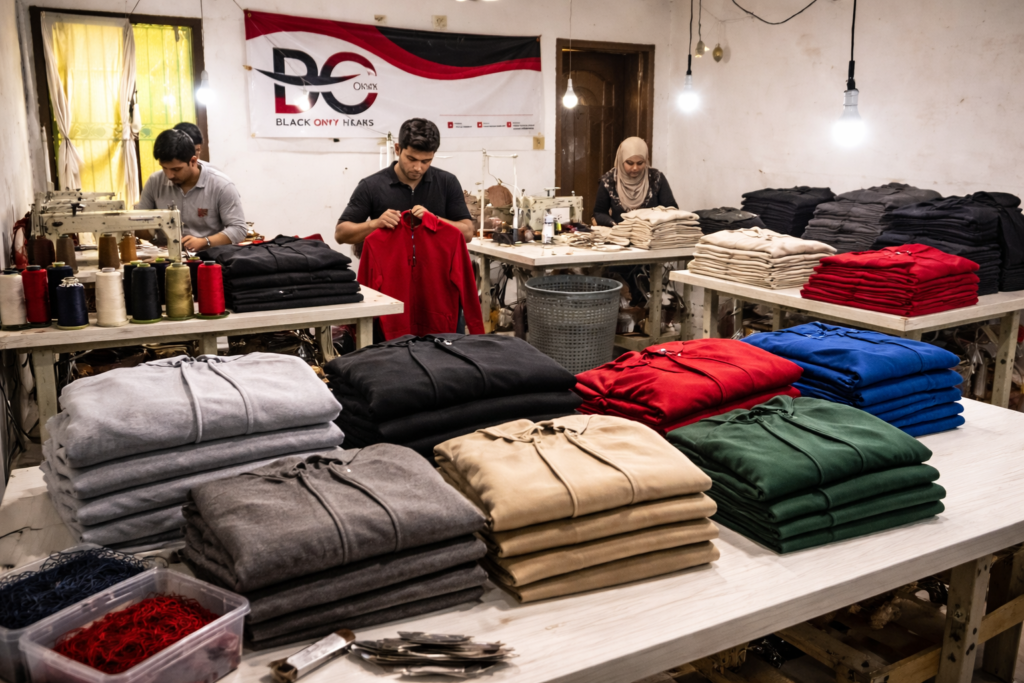
Black Onyx Wears is a dedicated sportswear manufacturer in Sialkot, Pakistan — purpose-built to serve European and Gulf B2B buyers who require production quality, communication standards, and export documentation that meets international requirements.
We are not a trading agent or middleman. We are a manufacturer — and every aspect of our operation is oriented around delivering consistent, verifiable quality to international buyers.
Our manufacturing range:
As full-capability custom sportswear manufacturers, we produce across the complete performance apparel spectrum:
- Custom gym wear — leggings, sports bras, shorts, tank tops, seamless sets
- Custom activewear — yoga collections, running gear, cycling kits, fitness wear
- Team sports kits — football jerseys, training kits, basketball uniforms, squad packages
- Compression and performance base layers
- Tracksuits, hoodies, and warm-up jackets
- Private label sportswear collections — from concept to finished branded product
As experienced gym wear manufacturers in Pakistan and activewear manufacturers in Pakistan, we work with the full range of performance fabrics demanded by European and Gulf markets — moisture-wicking polyester, sublimation fabrics, spandex blends, recycled sustainable textiles, fleece, and French terry.
What we offer European and Gulf buyers specifically:
✅ Private label manufacturing — full branding: woven labels, hangtags, custom packaging, polybag printing ✅ GSP+ compliant documentation — Certificate of Origin on every EU-bound shipment for zero import duty ✅ GCC export documentation — properly attested commercial documents for Gulf customs clearance ✅ Dedicated account manager — one point of contact from inquiry through delivery ✅ Third-party inspection welcome — we support SGS, Bureau Veritas, Intertek, and independent audit firms ✅ Transparent production reporting — milestone updates, photo documentation, QC reports throughout production ✅ Competitive FOB pricing — strong value at every volume tier without compromising on material or construction quality
Frequently Asked Questions
What is the minimum order quantity for custom sportswear from Black Onyx Wears? MOQs start from 50–100 pieces per design for sublimation products and 200–300 pieces per style for cut-and-sew garments. Multi-style programs allow more flexibility — contact us to discuss your specific requirements.
How long does production take? Standard lead times are 30–45 days from sample approval and confirmed order. Larger or more complex programs may require 45–60 days. A detailed production schedule is shared at order confirmation.
Do European buyers pay import duty on sportswear from Pakistan? No. Under the EU’s GSP+ trade scheme, qualifying Pakistani textile and apparel exports attract zero import duty. We provide the Certificate of Origin with every EU-bound shipment to ensure you claim this benefit in full.
Can Gulf buyers source from Black Onyx Wears? Absolutely. We actively supply buyers in the UAE, Saudi Arabia, Kuwait, Qatar, and other GCC markets. Sea freight from Karachi to Dubai takes 3–5 days — one of the fastest import routes available for Gulf sportswear buyers.
Can you manufacture sportswear under our brand name? Yes. Full private label clothing manufacturing is one of our core capabilities. We produce with your brand labels, hangtags, packaging, and all branding elements exactly as specified.
Do you work with new brands and startups? Yes. We work with established importers and first-time brand builders alike. If you are launching a private label activewear or gym wear brand and need a manufacturer who can guide you through the process, we are here for that conversation.
Start Sourcing with Black Onyx Wears Today
Whether you need a reliable bulk sportswear supplier for wholesale distribution, a custom sportswear manufacturer for your private label brand, or a long-term manufacturing partner for your sportswear business in Europe or the Gulf — Black Onyx Wears is ready.
Contact us today. Our team responds within 24 hours.
📞 WhatsApp / Phone: +92 321 7884214
🌐 Website: https://blackonyxwears.com/
📍 Based in: Sialkot, Punjab, Pakistan — manufacturing for Europe and the Gulf
Black Onyx Wears — Trusted Sportswear Manufacturer in Pakistan. Serving Europe and the Gulf.